
The Great Escape: Analyzing the April 2026 U.S. Rescue Mission in Iran
In the early days of April 2026; the world watched with bated breath as a high-stakes drama unfolded in the rugged terrain of the Iranian interior. Following the start of Operation Epic Fury; a U.S. F-15E Strike Eagle was downed by enemy air defenses; sparking one of the most complex and dangerous combat search and rescue (CSAR) operations in modern military history. This mission; which resulted in the successful recovery of both crew members; has already become a case study in joint-force coordination and strategic deception.
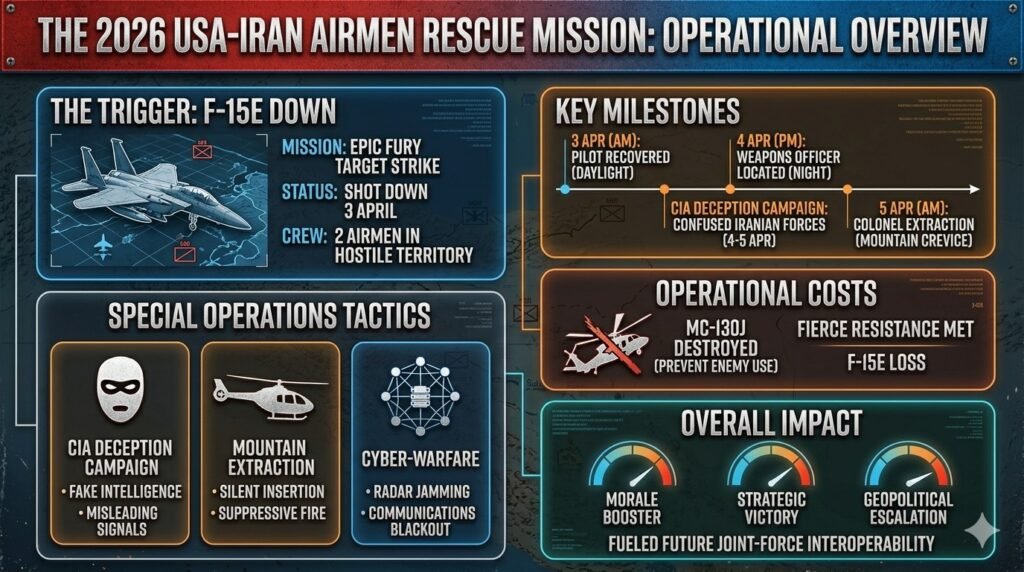
The Downfall of the Strike Eagle
On Friday; April 3; 2026; during a targeted strike mission; an American F-15E was hit by Iranian surface-to-air missiles. The aircraft went down in a remote region; forcing the pilot and the weapons system officer to eject into a highly contested environment. With Iranian ground forces mobilized to capture the Americans for propaganda purposes; the clock began ticking for the U.S. military to launch a recovery effort before the airmen could be seized.
Phase One: The Daylight Recovery
The first stage of the rescue occurred with startling speed. Within hours of the crash; U.S. assets were able to locate the pilot. Under the cover of rapid air support; a recovery team conducted a daylight extraction; pulling the first airman from the zone before Iranian search parties could consolidate their positions. However; the second crew member—a senior-ranking colonel—remained missing; having moved away from the crash site to evade capture.
The CIA Deception Campaign
What sets this 2026 mission apart from previous historical attempts; such as the 1980 Desert One mission; was the integration of sophisticated psychological warfare. To buy time for the wounded colonel; the CIA initiated a deception campaign. By leaking false intelligence and utilizing cyber-warfare to broadcast misleading ground signals; the U.S. successfully convinced Iranian commanders that the airman had already been moved to a different province. This forced the Iranian military to divert their resources; thinning their presence in the actual vicinity of the survivor.
Mountain Crevice Extraction
The second airman was found late Saturday night; hiding in a mountain crevice. Despite being wounded and facing pursue by large numbers of Iranian troops; he maintained radio silence until the extraction team was in position. The final rescue involved:
- Elite Special Operations helicopters navigating through mountainous terrain.
- Heavy close air support to suppress Iranian ground fire.
- The intentional destruction of a malfunctioning MC-130J to ensure sensitive technology did not fall into enemy hands.
The Costs of Success
While the primary goal of bringing the airmen home was achieved; the mission was not without its costs. President Trump acknowledged the fierce resistance met during the extraction. The loss of the F-15E and the subsequent destruction of the transport aircraft highlight the extreme risks inherent in operating within Iran’s sophisticated defensive network. Despite these losses; the successful recovery has been hailed as a major tactical victory for the coalition forces.
Impact on Operation Epic Fury
The successful rescue has emboldened U.S. and Israeli leadership as they continue the broader campaign against Iranian infrastructure. Following the mission; official statements indicated a potential escalation of strikes if the Strait of Hormuz remains closed. The rescue serves as a morale booster for coalition pilots; proving that the military has the capability and will to recover its own even in the heart of hostile territory.
Technological Advancements in CSAR
The 2026 mission showcased several new technologies that were not available in previous decades:
- Real-time biometric tracking: Allowing command to monitor the health of the airmen from afar.
- Stealth extraction craft: Reducing the radar cross-section of the rescue fleet.
- Advanced Electronic Warfare (EW): Which jammed Iranian communications during the critical minutes of the pickup.
Conclusion
The April 2026 rescue mission stands as a testament to the evolution of American special operations. By combining raw bravery with high-tech deception; the U.S. was able to prevent a repeat of historical hostage crises. As the conflict in the Middle East continues; the lessons learned from this mountain extraction will undoubtedly shape the future of aerial warfare and pilot safety for years to come.