SEO Ebook Metadata with ChatGPT Tips
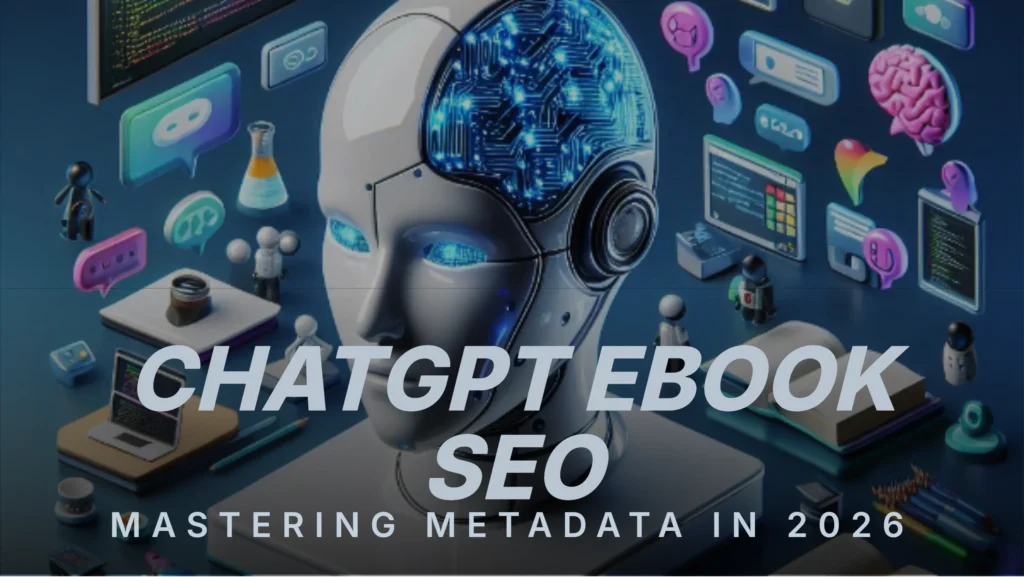
In 2026; the success of a digital book depends as much on discoverability as it does on quality. ChatGPT ebook SEO is the process of using AI to align your book’s metadata with the specific search queries your target readers are using. By optimizing your title; subtitle; and backend keyword fields; you ensure your work appears in front of the right audience on platforms like Amazon KDP; Apple Books; and Google Play. In a crowded marketplace; AI-driven metadata isn’t just a hack”—it’s a requirement for commercial success.
Phase 1: Keyword Research and Intent Mapping
Traditional keyword research can take hours; but ChatGPT ebook SEO workflows reduce it to seconds. Start by asking ChatGPT to “Generate a list of 20 high-intent search terms for a [Genre] book focusing on [Topic].” In 2026; ChatGPT can analyze current marketplace trends and suggest “Long-Tail Keywords” that have high search volume but lower competition. The goal is to find terms that indicate a ready-to-buy mindset; such as “step-by-step guide for beginners” rather than just “guide.”
- Use the “Seed Keyword” method to expand one broad term into 15 specific niches.
- Identify “Negative Keywords” to avoid attracting the wrong audience.
- Compare trending topics in your niche to identify untapped sub-categories.
- Ask for “Alternate Phrases” to capture different regional search habits.
Phase 2: Optimizing Titles and Subtitles for “Click-Through Rate”
Your title is your most powerful SEO asset. Use ChatGPT to brainstorm SEO-optimized titles that include your primary keyword naturally. For example; if your focus is “organic gardening;” ask ChatGPT to generate 5 title/subtitle combinations that balance a “catchy hook” with searchability. A subtitle like “The 2026 Guide to Sustainable Urban Farming” is far more effective than a generic one because it includes specific; high-value keywords that search algorithms prioritize.
Phase 3: Crafting High-Conversion Book Descriptions
A book description (blurb) serves two masters: the algorithm and the human reader. For ChatGPT ebook SEO; instruct the AI to “Write a 300-word book description that includes [Keyword 1]; [Keyword 2]; and [Keyword 3] at least twice each.” Ensure the description follows the “Hook-Value-CTA” structure. In 2026; search engines index these descriptions; so using rich; descriptive language and bulleted lists of “What you’ll learn” can significantly improve your ranking in both bookstore searches and Google.
Phase 4: Mastering the “Seven Backend Keywords”
Most platforms allow you to input hidden “backend keywords.” This is where ChatGPT ebook SEO gives you a massive advantage. Ask ChatGPT to “Provide 7 short-phrase keywords for a [Genre] book that cover related topics; synonyms; and audience pain points.” These phrases shouldn’t repeat your title; instead; they should cover the “adjacent” terms readers might type in—such as “passive income ideas” for a book titled “Investing for Beginners.”
Conclusion
Mastering SEO ebook metadata with ChatGPT tips is about working smarter; not harder. By using AI to bridge the gap between your content and the search bar; you significantly increase your book’s “Organic Reach.” In 2026; the authors who win are those who treat their metadata as a living asset; frequently updating it based on new trends. Start by asking ChatGPT to “Audit my current book title and description for SEO strength” today. Your next reader is out there; you just need to make it easy for them to find you.
“