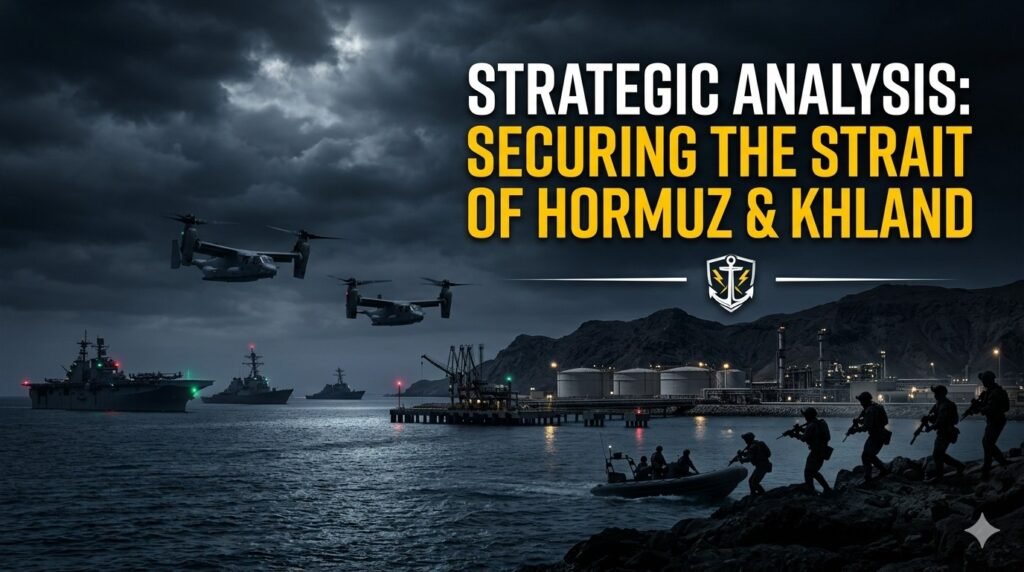
The Geopolitical Chessboard: Securing the Strait of Hormuz and Kharg Island
The Strait of Hormuz remains the world’s most sensitive maritime chokepoint; accounting for approximately one-fifth of the world’s liquid petroleum consumption. In a hypothetical escalation; the strategic necessity of Kharg Island—the primary terminal for Iranian oil exports—cannot be overstated. For military planners; the objective would not necessarily be a long-term occupation; but rather a calculated seizure to force negotiations and ensure the free flow of global energy markets.
The Role of Special Operations and Rapid Response Units
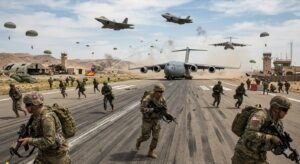
Any operation targeting a facility as fortified and geographically significant as Kharg Island would require the precision of Elite US Special Operations Forces. The 82nd Airborne Division and various Marine Expeditionary Units (MEU) are specifically trained for these high-stakes; rapid-insertion scenarios. These units are capable of mobilizing and securing key coastal infrastructure within an 18-hour window; a timeline critical for maintaining the element of tactical surprise.
- Airborne Insertion: Utilizing paratroopers to seize local airfields and neutralize anti-air capabilities.
- Amphibious Assaults: Using Marine rapid-response crafts to secure docking facilities and oil storage hubs.
- Electronic Warfare: Disrupting local communications to prevent a coordinated counter-offensive during the initial breach.
Tactical Objectives: Why Kharg Island?
Kharg Island acts as a pressure point. By controlling the island; an external force effectively controls the tap of regional oil exports. Unlike the mainland; the island’s isolation makes it a viable target for a localized operation that avoids the complexities of a full-scale ground war. The goal is leverage. By holding the terminal; a military force can dictate the terms of maritime passage through the Strait of Hormuz without needing to patrol every square mile of the waterway.
Logistics and the ‘Short Raid’ Philosophy
The primary constraint of such an operation is logistics. Sustaining a massive force on an island terminal is a nightmare for supply chains. Therefore; military experts favor the Short Raid Model. This involves:
- Securing the perimeter with light infantry.
- Avoiding the deployment of heavy armor like M1 Abrams tanks; which are difficult to transport and maintain in isolated maritime environments.
- Utilizing sea-based logistics via the U.S. Fifth Fleet to provide fire support and supplies.
By focusing on limited objectives; the force minimizes its footprint while maximizing its strategic impact. The intention is to create a defensive bubble that makes any attempt at recapturing the island too costly for the adversary; thereby forcing a diplomatic resolution at the international level.
Global Energy Implications
The mere threat of such an operation has immediate effects on Brent Crude pricing and global insurance premiums for shipping. A successful seizure would theoretically stabilize the Strait by removing the threat of mines or fast-attack craft harassment; though it simultaneously risks a broader regional conflict. Strategic planners must weigh the benefit of energy security against the risk of a sustained insurgency or retaliatory strikes on other regional energy hubs.
Conclusion: Precision over Power
Modern warfare in the Persian Gulf is moving away from the era of massive troop deployments. Instead; it is defined by the surgical application of force. Securing the Strait of Hormuz through a focused operation on Kharg Island represents the pinnacle of this strategy: using elite; specialized units to achieve a global economic objective with minimal long-term territorial entanglement. The success of such a mission hinges on speed; logistical efficiency; and the clear communication of limited intent to the international community.