
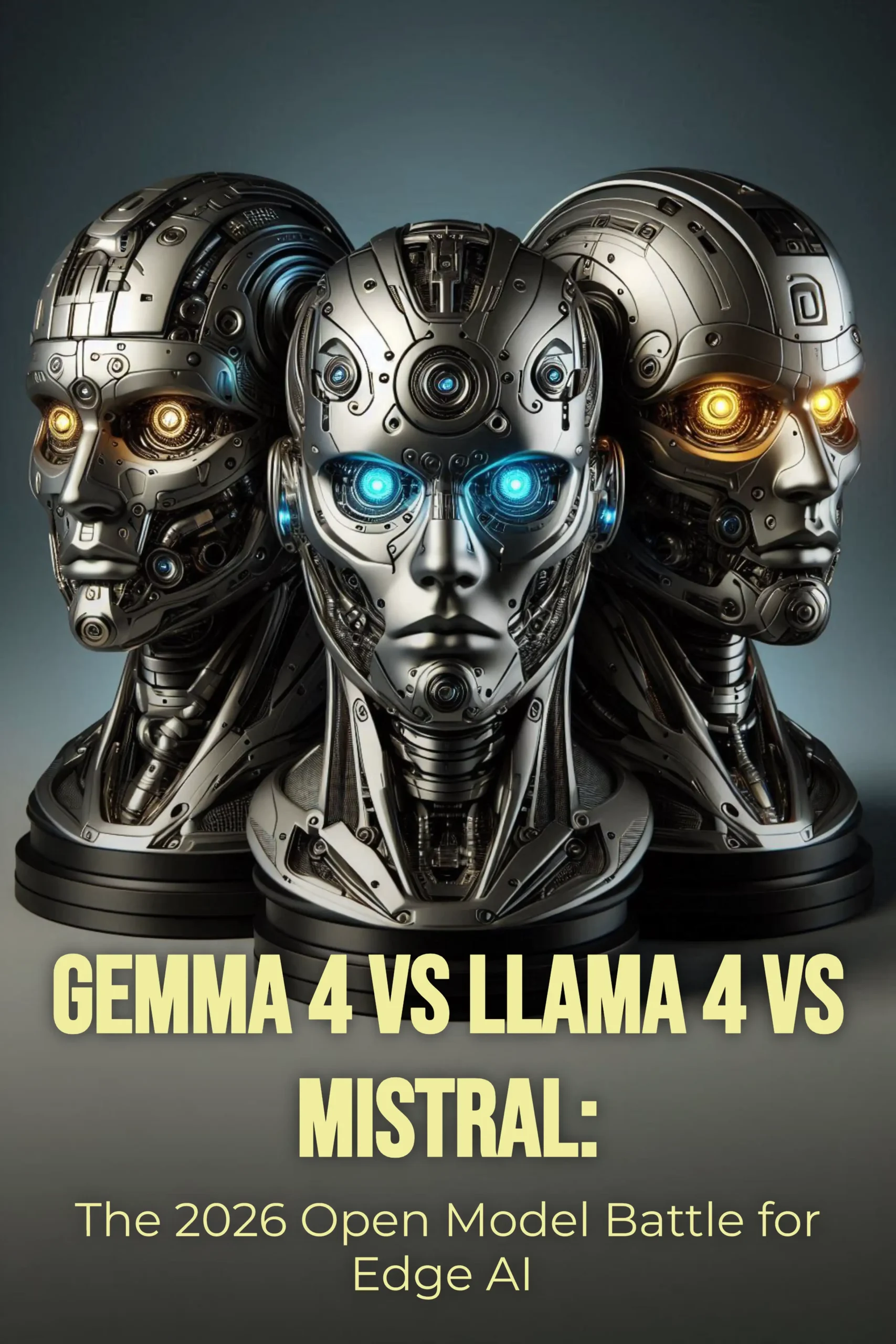

The Evolution of Edge Intelligence in 2026
As we move deeper into 2026, the shift from cloud-based monoliths to Edge AI has redefined the landscape of machine learning. The demand for localized, low-latency intelligence has sparked a fierce competition between the industry’s most prominent open-weights architectures. This guide provides an analytical deep dive into the three titans of the 2026 AI ecosystem: Gemma 4, Llama 4, and the latest Mistral models. Whether you are deploying on mobile devices, IoT sensors, or specialized robotics hardware, this book breaks down the complexities of model selection into actionable insights for developers and enterprises alike.
Comparative Benchmarks and Hardware Efficiency
Understanding the technical nuances of these models is critical for successful deployment. We explore the 2026 benchmark showdown, offering side-by-side performance metrics across reasoning, coding, and multilingual tasks. Furthermore, the text addresses the practicalities of hardware efficiency, featuring real-world data on NPU utilization, thermal throttling, and battery impact across the latest Snapdragon, Apple Silicon, and NVIDIA Jetson platforms. You will learn expert techniques for quantization, pruning, and knowledge distillation to ensure high-parameter performance fits into low-memory environments. By analyzing Mixture-of-Experts (MoE) architectures, this guide helps you choose a model that scales effectively with your product requirements while avoiding future technical debt.
Licensing and Commercial Strategy
Beyond raw performance, the commercial landscape of AI in 2026 requires a clear understanding of the licensing minefield. We provide a detailed breakdown of the ‘open’ vs. ‘open-weights’ distinction, helping you navigate the commercial implications of Llama 4’s usage tiers versus the more permissive nature of Gemma and Mistral. This strategic overview ensures your stack remains future-proof and legally compliant in a rapidly evolving market.
What you get
- You receive: PDF (A4, print-ready) — opens on any phone, tablet, laptop or e-reader app
- Delivery: instant download after payment — nothing ships, nothing to wait for
Instant digital delivery from StoryBuddiesPlay. Any trouble with your download? support@storybuddiesplay.com



Reviews
There are no reviews yet.