
| Format | eBook, Audiobook, eBook and Audiobook Bundle |
|---|

By StoryBuddiesPlay
Qwen Agent World Revolution
Alibaba's World-Model System Redefining AI Agents and Autonomous Work
Discover Alibaba's groundbreaking Qwen Agent World system—a revolutionary 102-page guide by StoryBuddiesPlay exploring the simulation-based world-model redefining autonomous AI agents, enterprise automation, and trajectory training for 2026-2030.
Price range: £6.99 through £14.99
Launch price ends in
6d 14:05:33
-30%
Choose your formatInstant download
Secure checkout. Files are yours to keep.

Read a free chapter of The Candy Corn Confession
A full sample chapter from this small-town Halloween romance — free, no account, no card.
About this book
Introduction to Alibaba’s Groundbreaking Qwen Agent World System
The Qwen Agent World system is a transformative paradigm shift in artificial intelligence, marking the transition from standard static text generation to dynamic, autonomous world-model reasoning. Developed by Alibaba, this revolutionary framework simulates seven distinct, high-fidelity real-world environments: operating systems, web browsers, terminal interfaces, Android mobile setups, software engineering sandboxes, the Model Context Protocol (MCP), and web search ecosystems. By creating an end-to-end simulation matrix, Agent World allows autonomous AI agents to explore, interact, and learn from over 10 million complex interaction trajectories, dramatically cutting development costs, mitigating enterprise security risks, and accelerating deployment speed.
Advanced Three-Stage Training Pipeline and Model Architectural Scale
To achieve unprecedented autonomous decision-making capabilities, the Qwen Agent World architecture leverages a highly rigorous three-stage training pipeline. It begins with Continuous Pretraining (CPT) to build foundational world awareness, moves into Supervised Fine-Tuning (SFT) for instruction-following precision, and culminates in advanced Reinforcement Learning (RL) for superior multi-step reasoning, strategic planning, and adaptive self-correction. Available in both an agile 35B parameter version for rapid research iteration and a massive 397B parameter version for enterprise-grade performance, Qwen systematically outperforms competitors like GPT-5.4, DeepSeek-R1, OpenAI o1, Gemini Agents, and Claude-3.7 across nine major agentic benchmarks on the Agent WorldBench.
Enterprise Use Cases and the Future of Work (2026–2030)
Organizations worldwide are utilizing this system to deploy highly resilient agents across diverse domains including AI operations, automated customer support, full-stack software engineering, rapid quality assurance testing, and proactive cybersecurity defense. Authored by StoryBuddiesPlay, this extensive 102-page technical guide provides an exhaustive blueprint for AI researchers, systems engineers, and forward-thinking business leaders aiming to harness autonomous AI ecosystems from 2026 to 2030.
What you get
- You receive: MP3 audiobook — listen on any phone or player + PDF (A4, print-ready) — opens on any phone, tablet, laptop or e-reader app
- Delivery: instant download after payment — nothing ships, nothing to wait for
Instant digital delivery from StoryBuddiesPlay. Any trouble with your download? support@storybuddiesplay.com
Related products
- Software Development
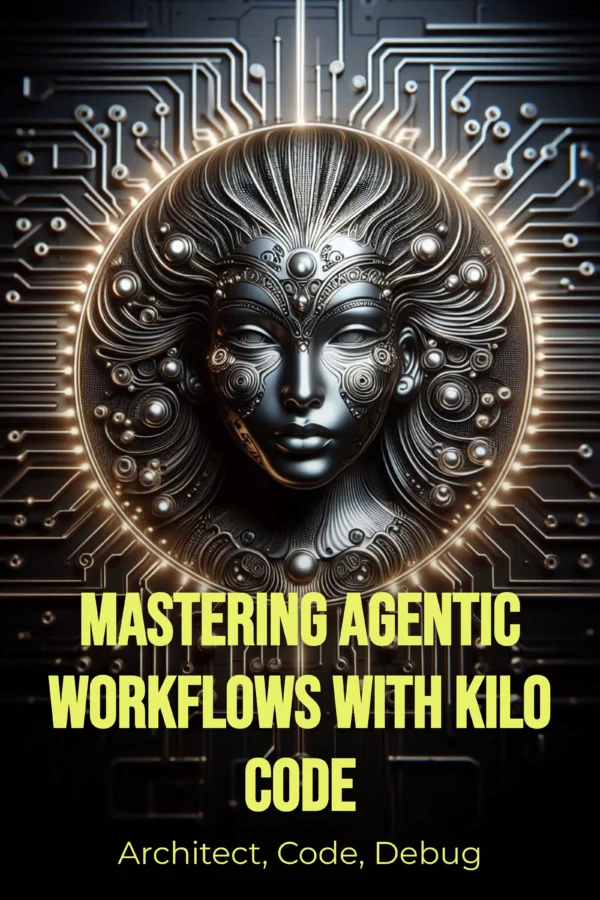
Mastering Agentic Workflows with Kilo Code: Architect, Code, Debug
Original price was: £6.99.£4.99Current price is: £4.99. Add to cart - AI Tools & Prompts
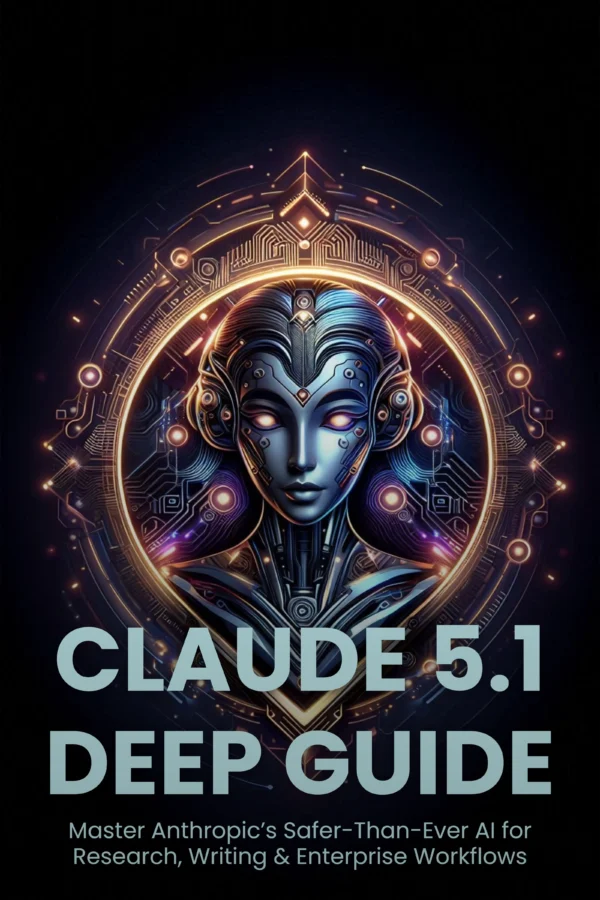
Claude 5.1 Deep Guide: Master Anthropic’s Safer-Than-Ever AI for Research, Writing & Enterprise Workflows
Price range: £6.99 through £14.99 Select options This product has multiple variants. The options may be chosen on the product page - AI Tools & Prompts
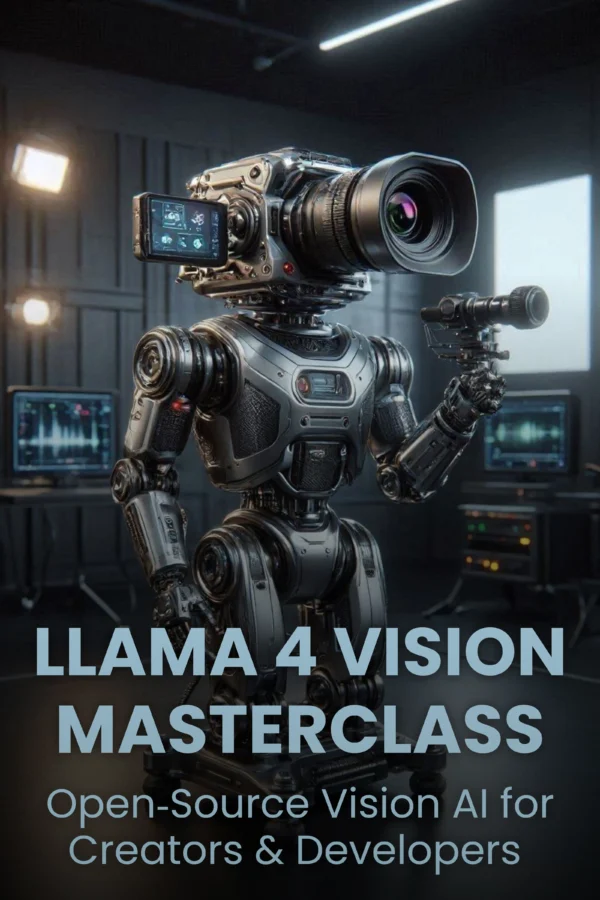
Llama 4 Vision Masterclass: Open-Source Vision AI for Creators & Developers
Price range: £6.99 through £14.99 Select options This product has multiple variants. The options may be chosen on the product page - AI Agents & Automation
Master Gemma 4 Coding: From Zero to Pro AI Agent
Original price was: £9.99.£6.99Current price is: £6.99. Add to cart

Reviews
There are no reviews yet.